Rigging is the step between “a model that looks right standing still” and “a model that can actually move.” It’s mechanical, exacting work — and it’s the part that determines whether animation later goes smoothly or becomes a constant fight against the mesh.
The Skeleton
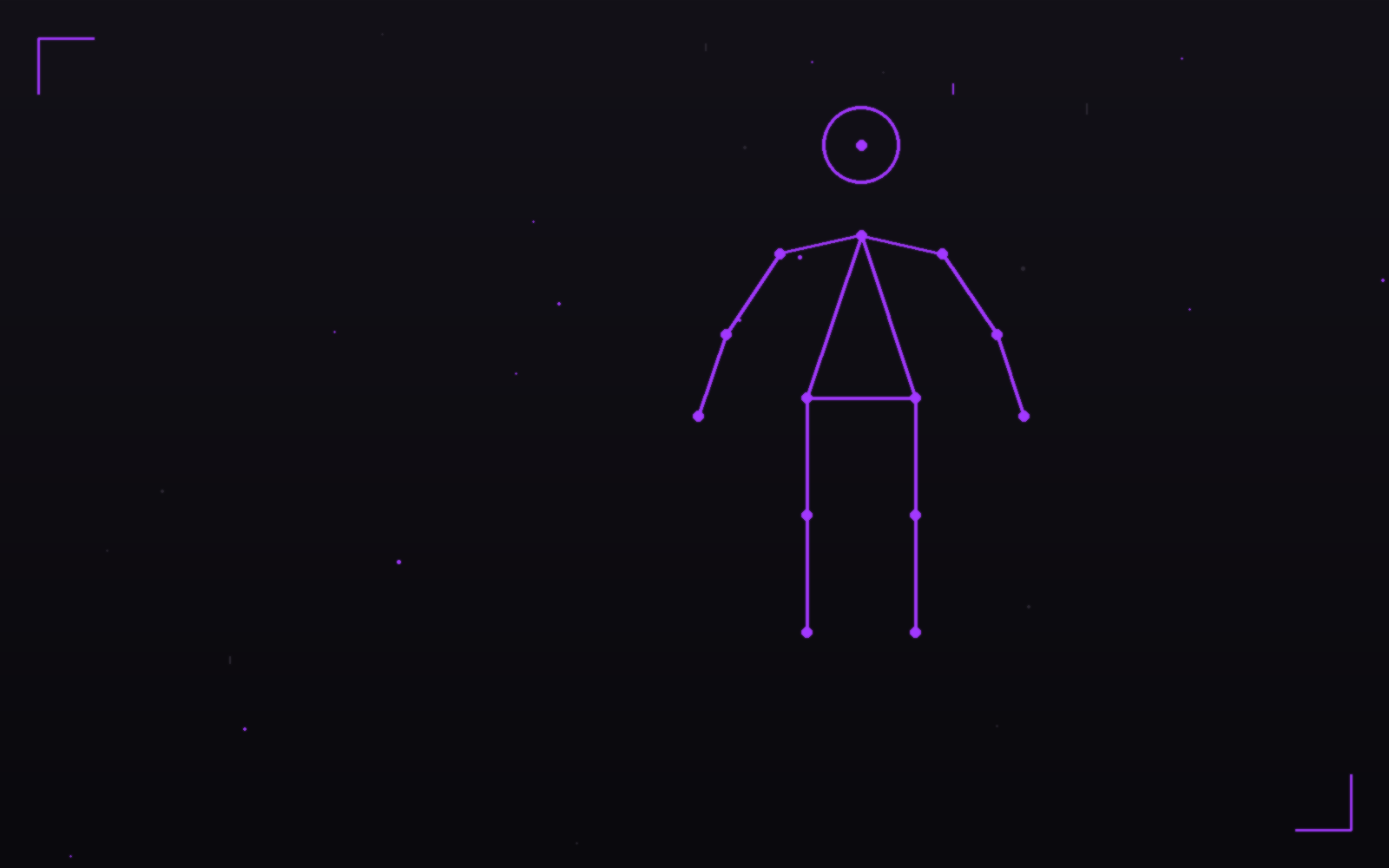
A rig starts with a bone hierarchy that roughly mirrors real anatomy — spine, shoulders, arms, hips, legs — placed to match the actual joints of the mesh. Bone placement matters more than people expect; a shoulder joint positioned even slightly wrong will visibly distort the mesh the moment the arm rotates.
Weight Painting
Once bones exist, every vertex in the mesh needs to know how much each nearby bone influences it — that’s weight painting. Get it right and a shoulder bends naturally. Get it wrong and you get the classic rigging artifacts: pinching at joints, volume loss at elbows and knees, or a shoulder that collapses instead of rotating. Areas with a lot of overlapping influence — shoulders, hips, the base of the neck — are almost always where the real weight-painting work happens.
Face Rigs Are Their Own Discipline
For VTuber and character work specifically, the face rig is arguably more important than the body rig, since that’s where most of the expressive communication happens. This is usually built either through blendshapes (pre-sculpted target expressions the software blends between) or bone-based facial rigs, depending on the target software and how much nuance the expressions need.
Testing Before Calling It Done
A rig isn’t finished when it looks fine in a T-pose — it’s finished when it survives a real range-of-motion test: full arm rotation, extreme facial expressions, whatever the character will actually be asked to do. Problems that are invisible standing still show up immediately under motion, which is exactly why that test happens before a rig ships, not after.
Good rigging is mostly invisible when it’s done well — nobody watching a stream thinks about weight painting. It only becomes visible the moment something’s wrong, which is usually the best argument for taking it seriously in the first place.
More Articles
Topology 101: Why Clean Mesh Matters
“Topology” just means how a 3D mesh’s edges and faces are arranged — and it quietly determines whether a model…
2 min read
FDM vs Resin: Which 3D Printer Should You Actually Get?
If you’re looking at your first (or next) 3D printer, the FDM-vs-resin question is the first fork in the road…
2 min readGot a project in mind?
Reading about it is one thing — send us the brief and we'll build it.
Start a Project